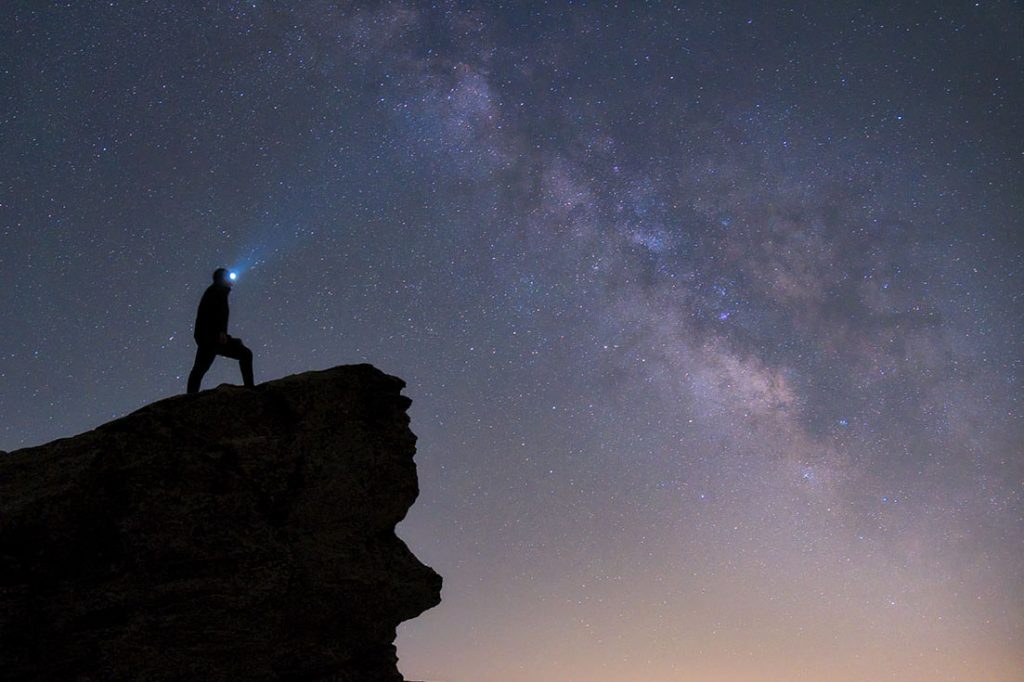

Can you imagine what it would be like to look through a professional telescope with your own eyes? And to set up your own equipment and photograph colorful nebulae or distant galaxies from one of Europe’s most pioneering astronomical observatories? Pay close attention!
Introducing the V CALAR ALTO EXPERIENCE 2026, the 5th edition of the comprehensive astronomy and astrophotography experience that will take place between June 5 and 7 in the unique natural setting of the Spanish Astronomical Center in Andalusia (CAHA) in Calar Alto, in the Sierra de los Filabres mountains in Almería (Spain), under one of the best night skies in Europe.
WHO IS THIS EXPERIENCE FOR?
Any photography and astronomy enthusiast in general, and especially those passionate about the universe who want to enjoy a comprehensive experience that includes visual astronomical observation through a large professional telescope and specific theoretical and practical training in deep space astrophotography.


The V CALAR ALTO EXPERIENCE 2026 is an event organized by AZIMUTH SPAIN, a company formed by professional astronomers with more than 10 years of experience in the field of astronomical and scientific tourism, with the collaboration of NATURAL PORTRAITS, which brings to this event its more than 20 years of experience in the world of astronomical observation and photography of the Universe. All this will guarantee us a “premium” and totally immersive experience in the world of astronomy and astrophotography, in which we will have the opportunity to make contact with one of the most important astronomical research centers in Europe.
WHAT DOES THIS EXPERIENCE INCLUDE?
1. Observation through the 1.23m professional telescope
On the afternoon of Friday, June 5, to kick off the event, we will visit the observatory grounds, where we will be welcomed by the staff of Azimuth Spain. After an introductory meeting where we will sample some traditional sweets, we will move to the dome of Calar Alto’s 1.23-meter professional telescope, where we will begin a private, fully customized visual astronomical observation session with this telescope. The session will last approximately 4 hours, during which Azimuth astronomers will direct the telescope to allow us to observe, directly with our own eyes, some of the deep-sky objects typical of the summer sky with a level of detail you have never experienced before.
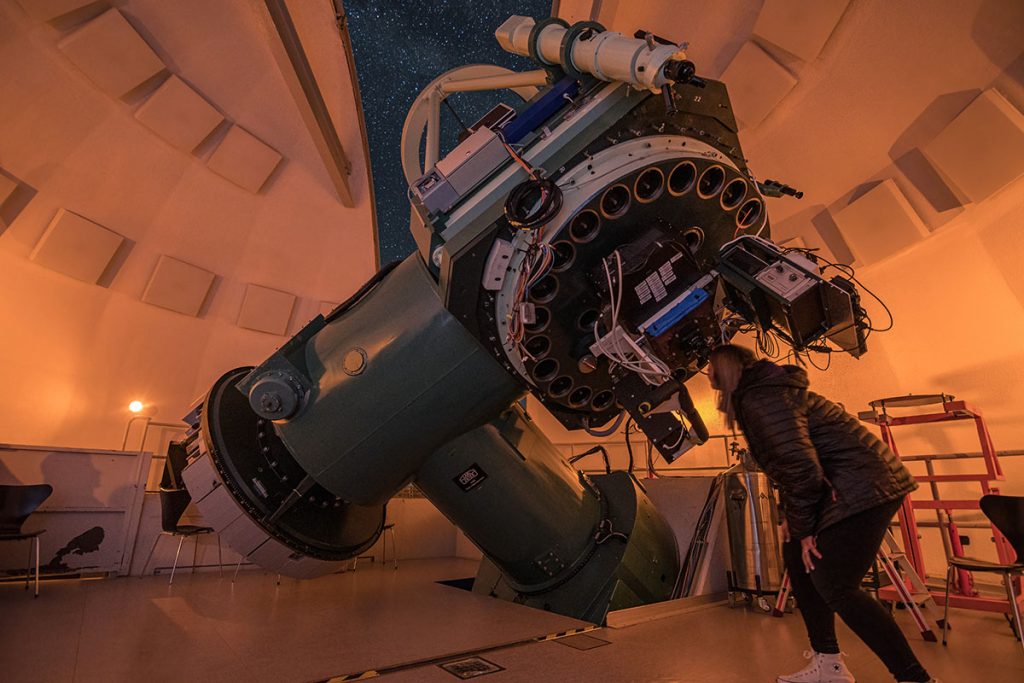
The 1.23-meter telescope at Calar Alto is the third largest telescope at the observatory, above the 80-centimeter Schmidt camera, and is the only telescope at Calar Alto equipped for use with an eyepiece or a conventional camera. In addition, Calar Alto’s 1.23-meter telescope is the largest telescope in Europe that allows direct observation of the universe through an eyepiece.
This telescope currently divides its time between science and astronomy outreach, both at the observational and astrophotographic levels. Its scientific uses include those related to planetary sciences and the solar system:
- Measurement and tracking of stellar occultations
- Study of NEOs (potentially hazardous near-Earth objects)
- Characterization of planetary atmospheres (planetary meteorology)
Stars and exoplanets:
- Exoplanetary transits
- Monitoring of stellar activity
The 1.23-meter telescope also participates in national and international collaborations for the training of the university community.
2. Visit to the facilities of the Calar Alto Spanish Astronomical Center in Andalusia
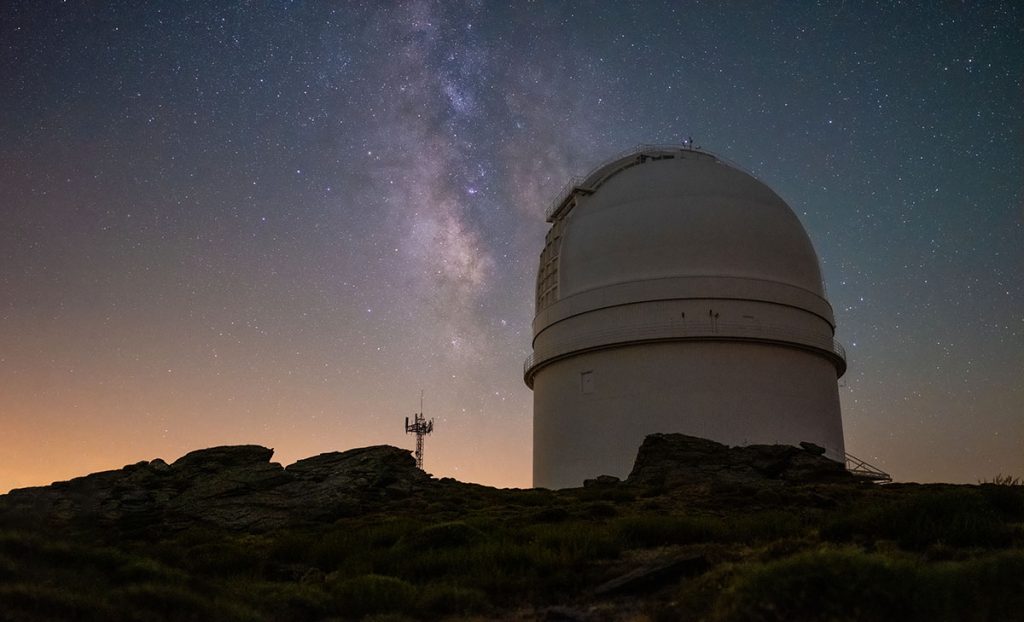
On the morning of Saturday, June 6, we will return to Calar Alto, this time to enjoy a guided tour of the observatory facilities. Once again, the staff of Azimuth Spain will guide us through the complex. This visit includes access to the 3.5m telescope at Calar Alto. With a dome 42m high, the 3.5m telescope at Calar Alto is the largest telescope in western continental Europe. This telescope, together with other large telescopes located within Spanish territory, such as the William Herschel, the Telescopio Nazionale Galileo, and the Gran Telescopio Canarias (GTC), the largest optical telescope in the world, contributes to positioning Spain at the forefront of astronomical research.
Important note: Children under the age of 12 are not permitted to enter the premises.
3. Practical workshop on deep sky astrophotography
On Saturday, June 6, in the late afternoon/early evening, with the help of Natural Portraits, we will begin the practical workshop on deep sky astrophotography. For this purpose, we will have a room set up at the Rural Ecofilabres complex, where we will be staying, where we will review the basic concepts involved in this photographic discipline:
- Assembling astrophotography equipment
- Station setting and polar alignment
- Locating astronomical objects
- Starting the astrophotography session
- Configuring capture sequences
- Handling advanced astrophotography equipment
- Wireless or remote control devices
- Use of filters
- Question and answer session
In this fifth edition in 2026, we will also have the special feature of the moon being visible from approximately 2 a.m. For this reason, we will introduce some basic concepts of high-resolution planetary and lunar astrophotography, a very interesting but little-known astrophotography discipline that can provide stunning images of objects in the Solar System. The Calar Alto Observatory environment has much to offer in this branch of astrophotography, providing atmospheric stability levels well above average. This allows for very high-resolution planetary images to be obtained.
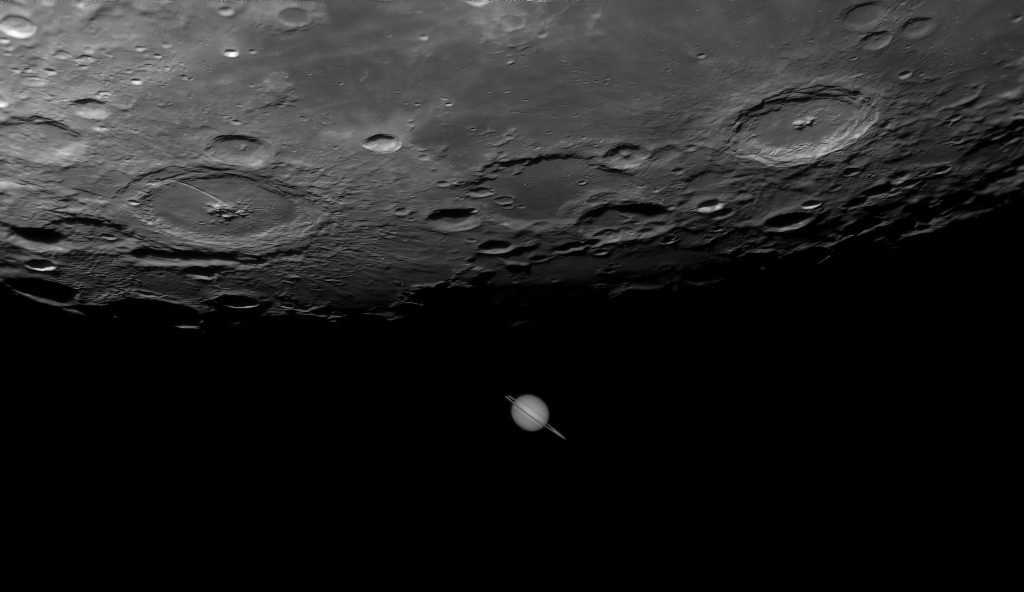
For the planetary astrophotography section, a 250/1200 Dobsonian telescope with a goto system and a planetary astrophotography camera will be used.
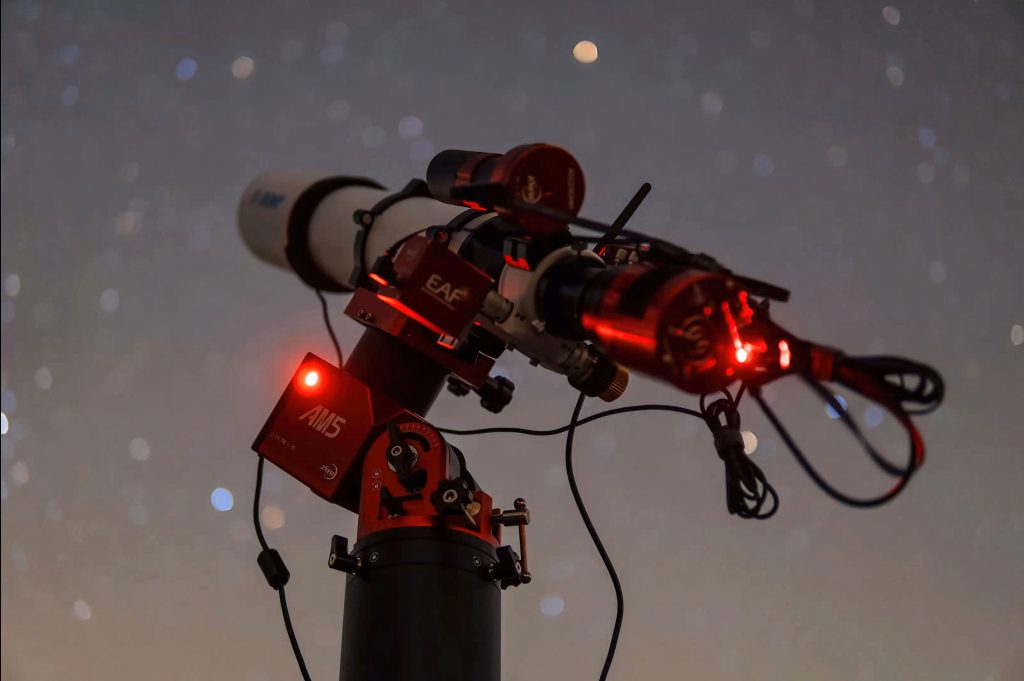
WHAT WILL WE PHOTOGRAPH DURING THE PRACTICAL SESSION?
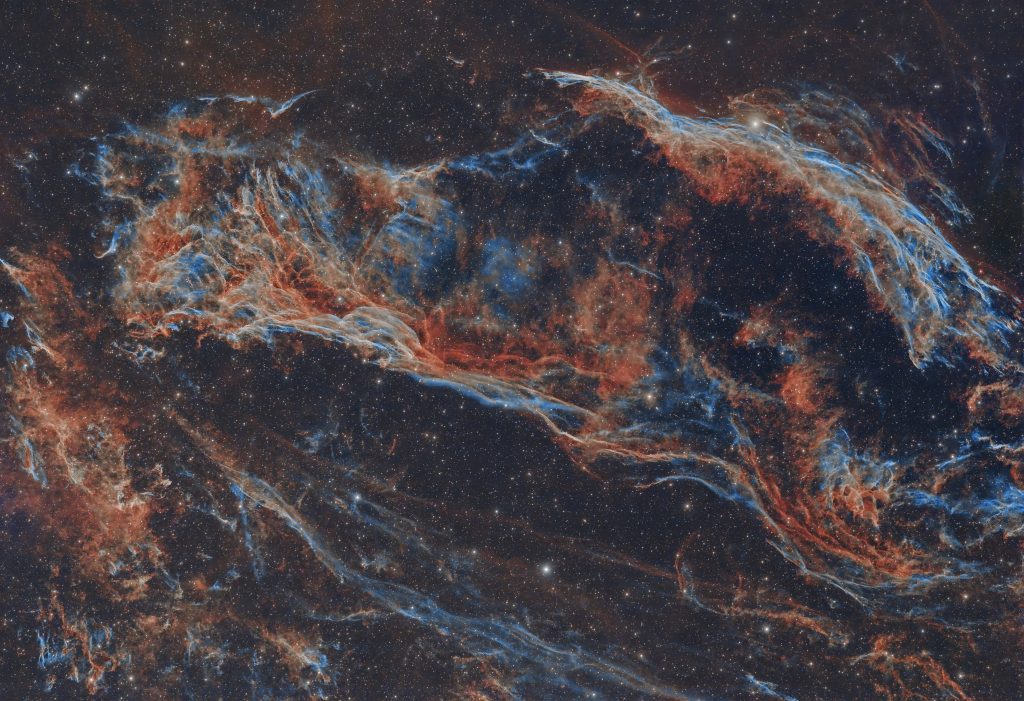
During the night, we will have access to astronomical objects typical of the summer season. We will be able to photograph the center of the Milky Way, regions such as the complex of colorful nebulae in Ophiuchus, the Lagoon Nebula, and the Trifid Nebula. We will also have access to the Cygnus constellation region, with its gigantic hydrogen nebulae North America, Sadr, and even the Veil Nebula, the remains of an ancient supernova explosion. Not to mention other spectacular objects such as the enormous Hercules globular cluster.
WHAT WILL THIS WORKSHOP TEACH YOU?
- To determine the ideal astrophotography equipment for your needs.
- To learn how to assemble, configure, and calibrate your equipment for each session.
- To achieve precise polar alignment.
- To be self-sufficient in using your own astronomical equipment.
- To determine the camera settings required for each astronomical object.
- To independently capture light shots and dark, flat, bias, and darkflat calibration shots.
- To choose the right filter for each astronomical object
- To achieve total control over all parts of your advanced astrophotography equipment
- To introduce yourself to the world of remote control of astrophotography equipment
WHAT EQUIPMENT WILL YOU NEED?
If you are going to work with lightweight astrophotography equipment:
- A camera with bulb mode and intervalometer.
- Spare batteries.
- Medium and long focal length lenses.
- A tripod.
- A star tracker mount. Don’t have one yet? Don’t worry, my equipment will be at your disposal and we will share it among those attendees who have brought their own mount.
If you are going to work with advanced astrophotography equipment:
- An equatorial mount, at least motorized in right ascension
- Your telescope
- A camera with bulb mode or a dedicated astrophotography camera
- Autoguiding system (optional)
- A power station or battery to power the equipment
And in both cases:
- Headlamp and spare batteries.
- Mountain footwear and warm clothing. Although it will be summer, the Calar Alto complex is located at an altitude of 2,168 m, so it will feel cold.
This experience will allow you to visit and learn about the Calar Alto Observatory, one of the Spanish scientific community’s Unique Scientific and Technological Infrastructures (ICTS), as well as enjoy the exceptional opportunity, unique in Europe, to make visual observations through a large professional telescope, guided and accompanied by professional astronomers. We will all share knowledge and opinions, making the event even more enriching. And all this under one of the best night skies in Europe!
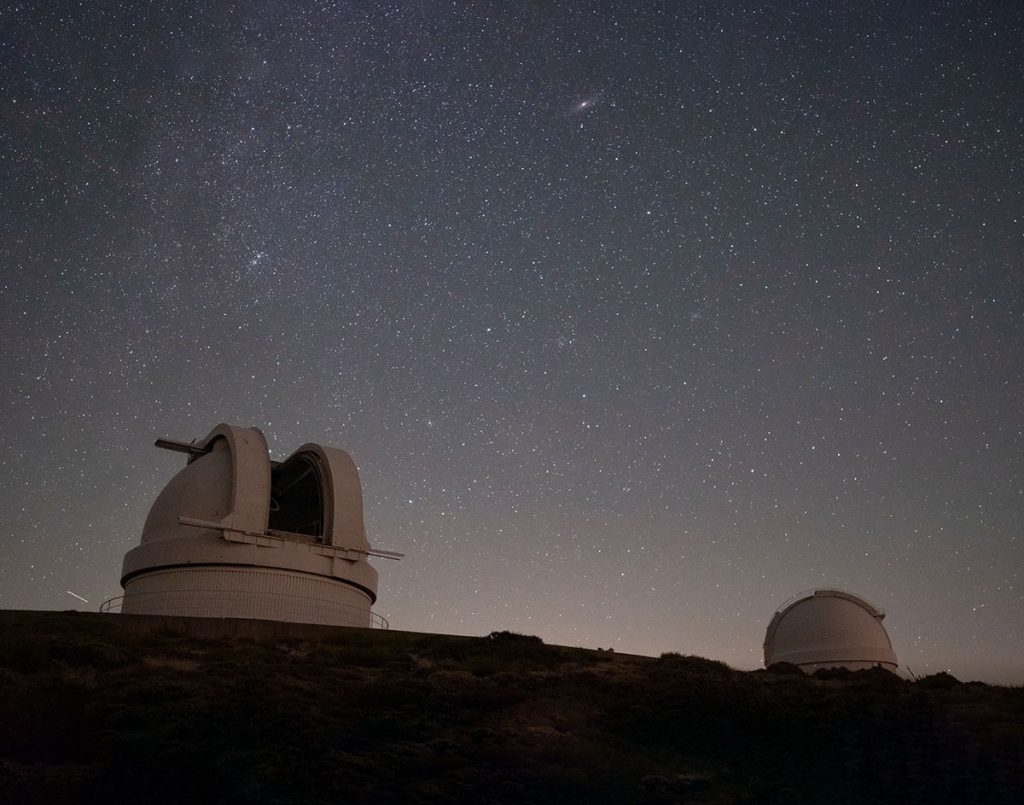
WHAT IS NOT INCLUDED IN THE EXPERIENCE?
This event does not include travel, accommodation, lunch, dinner, or breakfast. These items must be paid for by the attendees.
However, we have secured an accommodation agreement with the option of breakfast at a discounted price with the rural accommodation complex “Rural Eco Filabres” (www.ruralecofilabres.com). Double apartments with private bathroom and kitchen. For information or reservations: info@ruralecofilabres.com or telephone 722 330 563. Please indicate the reference Luis Miguel Azorin Albero Astronomy Group.
USEFUL INFORMATION
We will try to ensure that all participants can capture images with their own photographic equipment during the practical session of the deep sky astrophotography workshop. However, depending on the number of participants and the astrophotographic equipment available, this may not be possible, in which case all participants will be provided with all the material generated during the astrophotography session.
To practice astrophotography, we need clear skies, but we cannot control the weather. This means that there is a possibility that the days scheduled for the experience may have adverse weather conditions that prevent us from carrying out, either totally or partially, both the observation session with the 1.23m telescope and the practical astrophotography session of the workshop. To mitigate this situation, attendees will be offered digital content that faithfully shows what was intended to be taught during the practical session. In addition, a night photography and basic lighting session will be held in the natural surroundings of the Calar Alto Observatory, and each attendee will be refunded the amount corresponding to the astronomical observation with the 1.23m telescope, according to the situation described in the important note at the bottom of the page*.
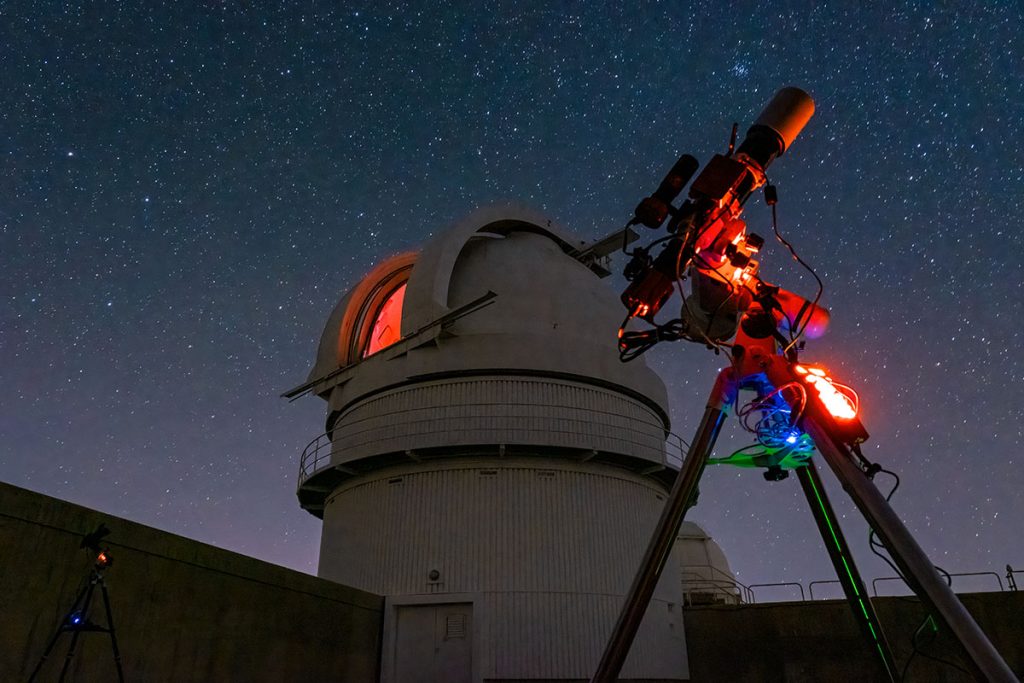
VERY LIMITED SPOTS
AND WHAT IS THE COST OF ALL THIS?
295€ price per person
50% will be paid by bank transfer upon course registration, and the remaining 50% between May 1 and May 31, 2026.
* Important note: If the 24-hour weather forecast is not favorable for observation through the 1.23m professional telescope, Azimuth Spain staff will notify Natural Portraits of this circumstance, canceling the activity and refunding each participant the amount corresponding to the cost of this part of the event: €85. However, if the 24-hour weather forecast is favorable, and either during the hours or moments prior to the observation, or at any other time once the activity has begun, there is a sudden change in the weather that partially or totally prevents the activity from taking place, Azimuth Spain staff will do everything possible to provide the best service given the circumstances, but NO REFUND WILL BE MADE, as the activity cannot be canceled once the telescope has been set up and the organizational and management tasks required to carry it out have been completed.
SOME FREQUENTLY ASKED QUESTIONS:
- Do I need any prior knowledge? The theoretical-practical workshop starts at a beginner level, so you will learn everything you need to know from scratch. You just need to know the basic functions of your camera.
- Can I bring someone with me if they are not interested in the theoretical-practical astrophotography course? Yes. However, if your companion wishes to observe the stars through Calar Alto’s 1.23m professional telescope, they will have to pay the full registration fee due to capacity restrictions. Only if they do not wish to observe with the 1.23m telescope will they be eligible for a discount and will be able to join our Saturday visit to the observatory facilities without any problems.
- What if I don’t have a star tracker mount or astrophotography equipment? You can enjoy this experience with just a camera. My astrophotography equipment and mounts will be at your disposal.
- Will we focus 100% on astrophotography, or will we also spend time on night photography and the Milky Way? In principle, the theoretical-practical workshop will focus on deep sky and planetary astrophotography. However, during the event, we will also have time to do other types of photography. The Calar Alto environment offers a huge range of possibilities.